Useful information

Heating knowledge, organised clearly.

Heating of the heat carrier in an electrode (ionic) boiler takes place by direct conversion of electricity into thermal energy. The electric current splits the water molecules in the boiler into positively and negatively charged ions, which move towards the positive and negative electrodes respectively, releasing energy, so that the water is heated directly, without any mediator (eg heating element). Once connected to the electrical grid, the boiler heats up almost immediately – after just a minute, the water temperature in the outlet pipe reaches 40 – 55º. As the water heats, its specific resistance decreases. The boiler gradually accumulates electronic power and converts it to water in the form of heat. The nominal capacity of the boiler will depend on the water temperature selected by the user and the amount of water in the system.
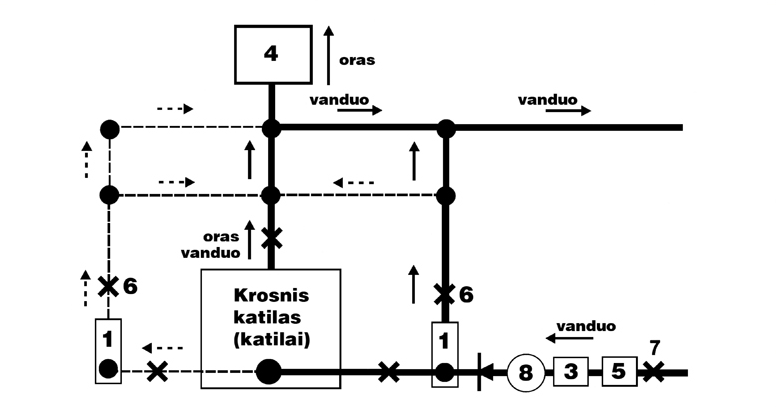
01Boiler assembly diagram, when electrolytic the ion boiler is connected as an additional heating device+
Boiler assembly diagram, when electrolytic the ion boiler is connected as an additional heating device
1. Electrode ion boiler 2. Radiator 3. Sensor – thermostat 4. Closed expansion vessel 5. Filter 8. Circulation pump 9. Underfloor heating X. Ball valve
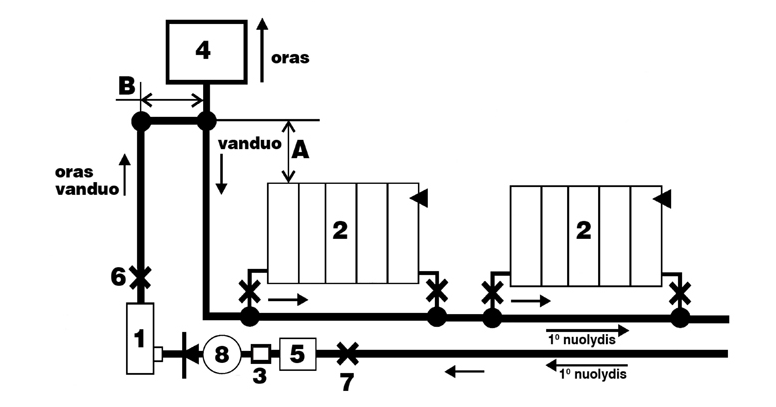
02Boiler assembly diagram, when electrolytic the ion boiler is connected as an additional heating device with radiators+
Boiler assembly diagram, when electrolytic the ion boiler is connected as an additional heating device with radiators
1. Electrode ion boiler 2. Radiator 3. Sensor – thermostat 4. Closed expansion vessel 5. Filter 8. Circulation pump 9. Underfloor heating X. Ball valve
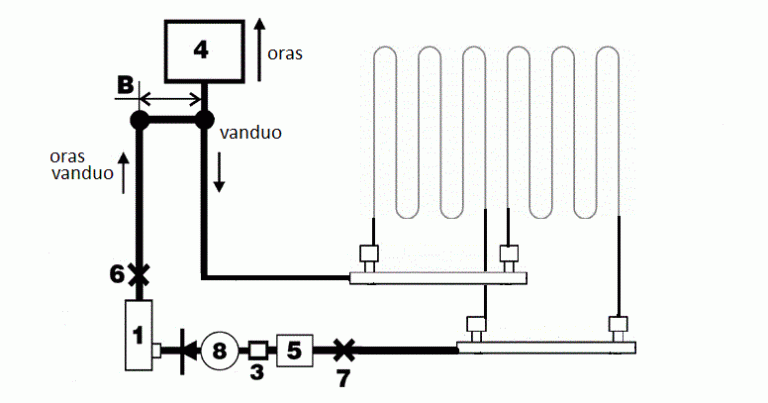
03Boiler assembly diagram, when electrolytic the ion boiler is connected as an additional heating device with underfloor heating+
Boiler assembly diagram, when electrolytic the ion boiler is connected as an additional heating device with underfloor heating
1. Electrode ion boiler 2. Radiator 3. Sensor – thermostat 4. Closed expansion vessel 5. Filter 8. Circulation pump 9. Underfloor heating X. Ball valve
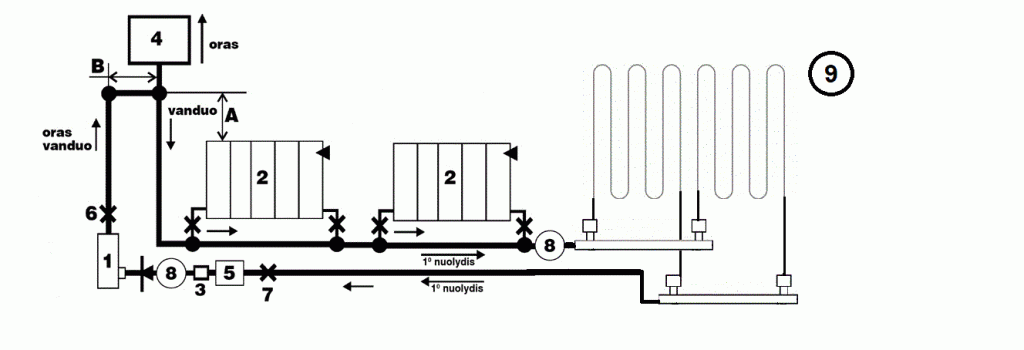
04Boiler assembly diagram, when electrolytic the ion boiler is connected as an additional heating device with radiators and underfloor heating+
Boiler assembly diagram, when electrolytic the ion boiler is connected as an additional heating device with radiators and underfloor heating
1. Electrode ion boiler 2. Radiator 3. Sensor – thermostat 4. Closed expansion vessel 5. Filter 8. Circulation pump 9. Underfloor heating X. Ball valve
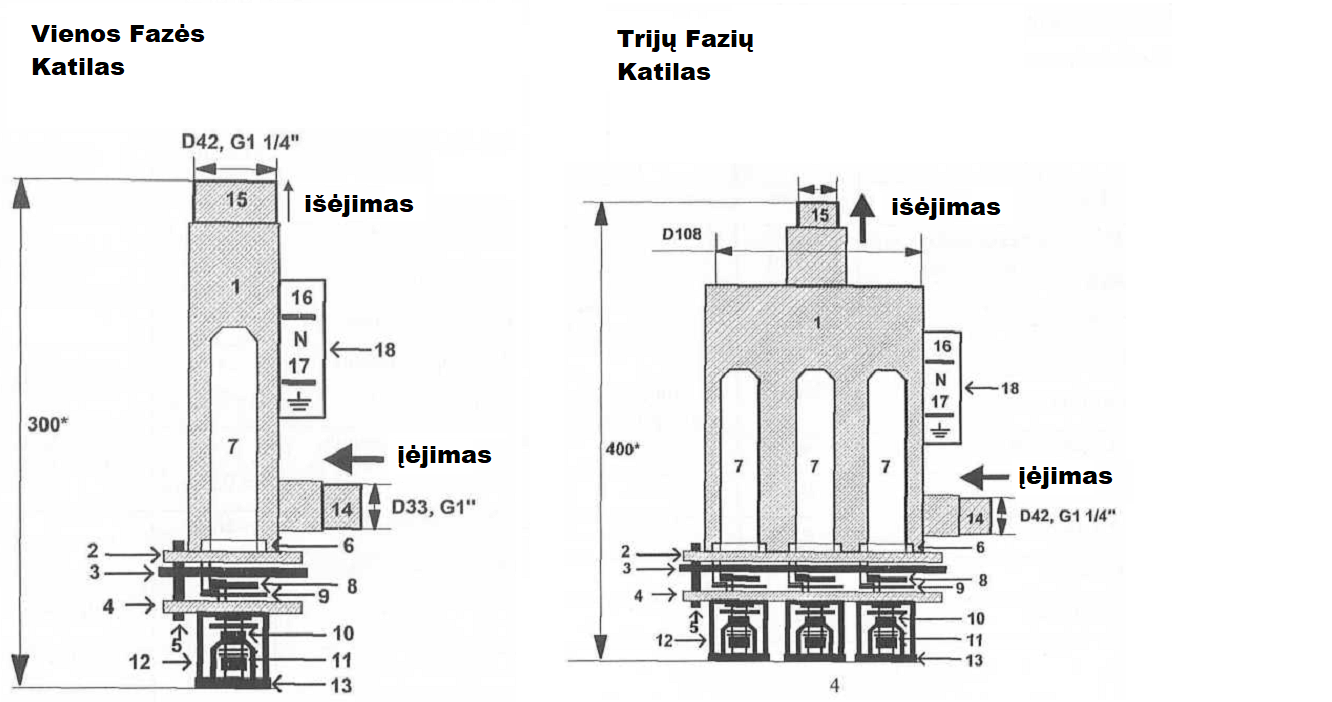
05Boiler assembly diagram+
Boiler assembly diagram
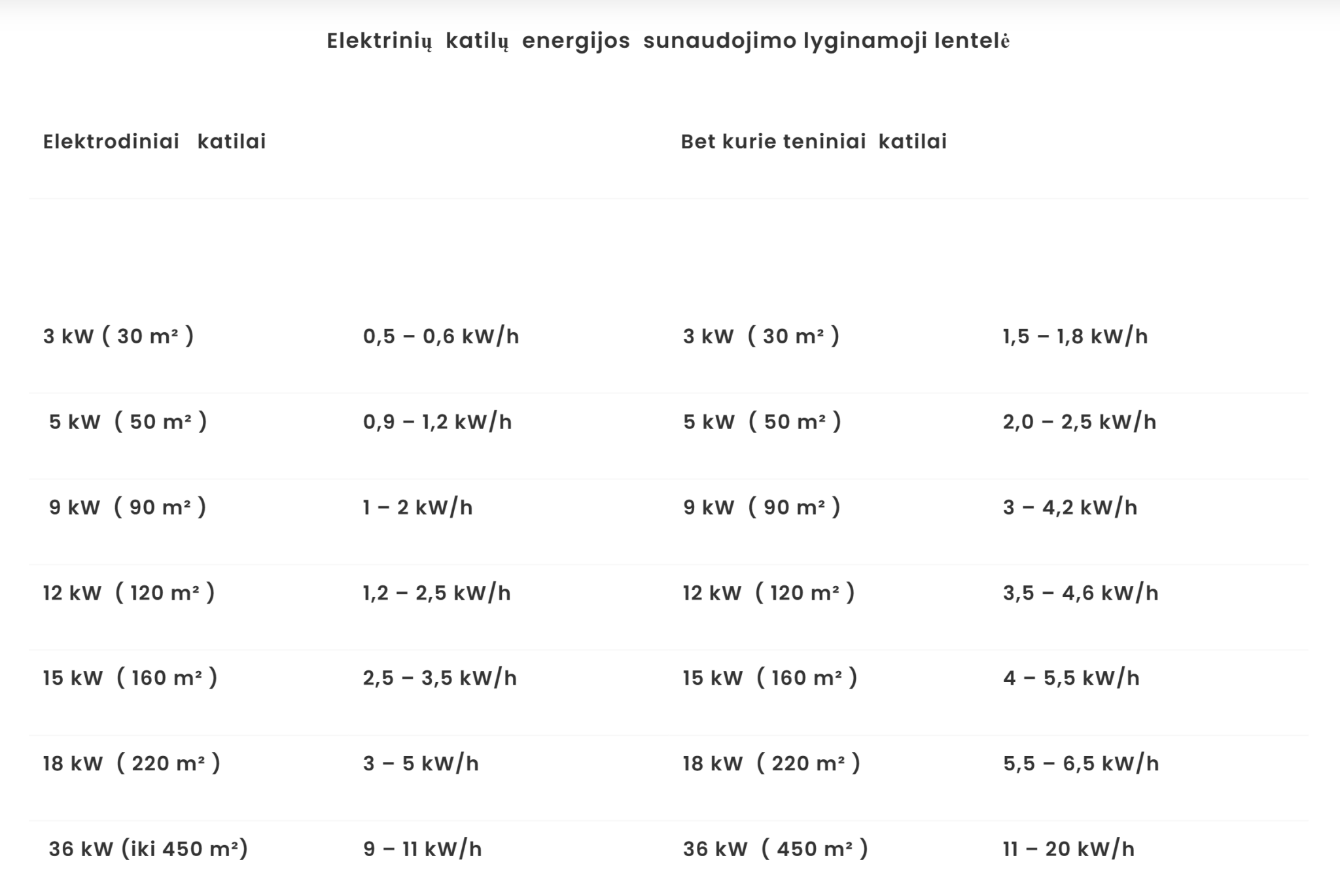
06Comparison table of energy consumption of electric boilers+
Comparison table of energy consumption of electric boilers
The summarized data on the performance of electric boilers are taken from the records kept at the objects where the electric boilers and electric heating element boilers were installed.
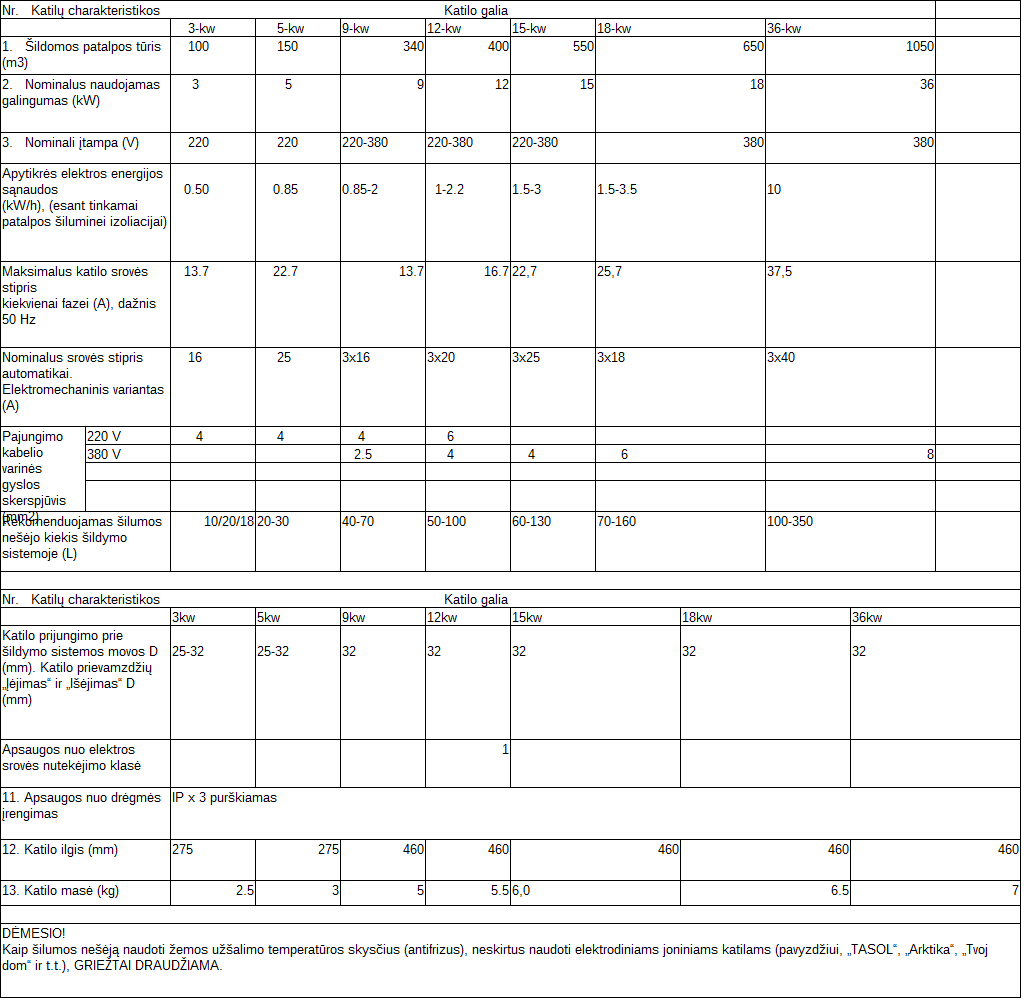
07Technical parameters of electrode ion boilers+
Technical parameters of electrode ion boilers

Būtina itin tiksliai vykdyti pateiktus reikalavimus:
Įėjimo į katilą temperatūra (daviklis) turi būti 150 C – 200 C temperatūros ribose.
Katilo įjungimo laikas ne ilgesnis nei 30 sekundžių.

Koregavimo atlikimas:
Įjunkite katilą ir po 30 sekundžių, grįžtančio šilumos nešėjo temperatūrai pasiekus 150 – 200 C temperatūrą, ampermetru išmatuokite paleidimo (standartinę) srovę. Paleidimo srovė būtinai turi atitikti parametrus nurodytus lentelėje.

Need a specific answer?

Ask the Ergonas team.